Journal · Period property
Renovating a listed flat in London
Period property
Listed does not mean the flat has to stay as it is. It means every change has to be justified.
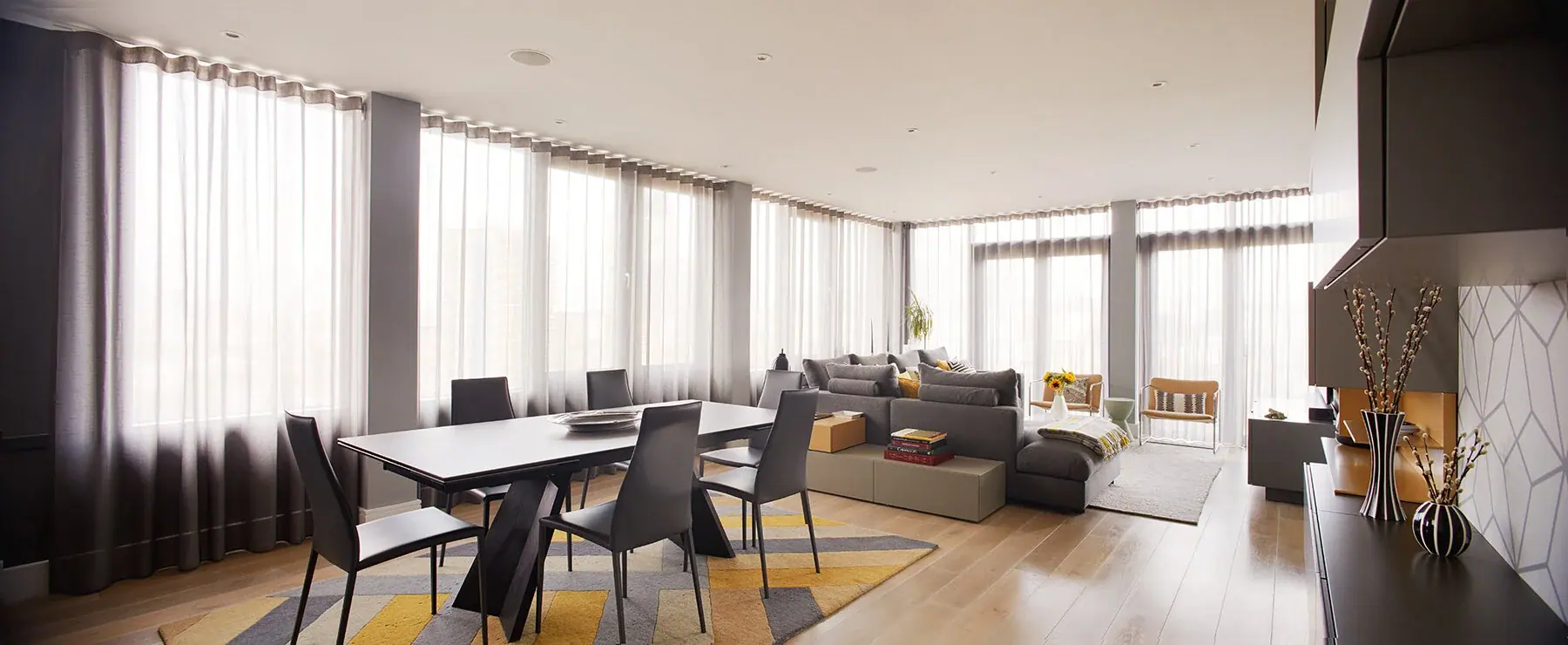
We refurbished a Grade II* listed 1960s flat in a Westminster conservation area to suit current lifestyles and modern conditions while retaining the character and the fabric of the building. Meeting both halves of that brief is most of the work.
The first shift is sequencing. On an unlisted property, design leads and consent follows. On a listed one the two run together: what you draw is shaped by what is likely to be consented, and pre-application conversations are worth having early.
The second is reversibility. Joinery in a listed interior should come out again without damaging historic fabric. That drives the fixing methods, the scribing strategy and how services are routed, often behind new joinery rather than chased into original walls.
The third is matching. We record existing mouldings, cornice profiles and skirting details and continue them rather than approximating. Where new work is deliberately modern, we make it legible as new rather than pastiche.
None of this makes a listed flat a bad buy. It does mean the work goes better with a studio that has done it before.